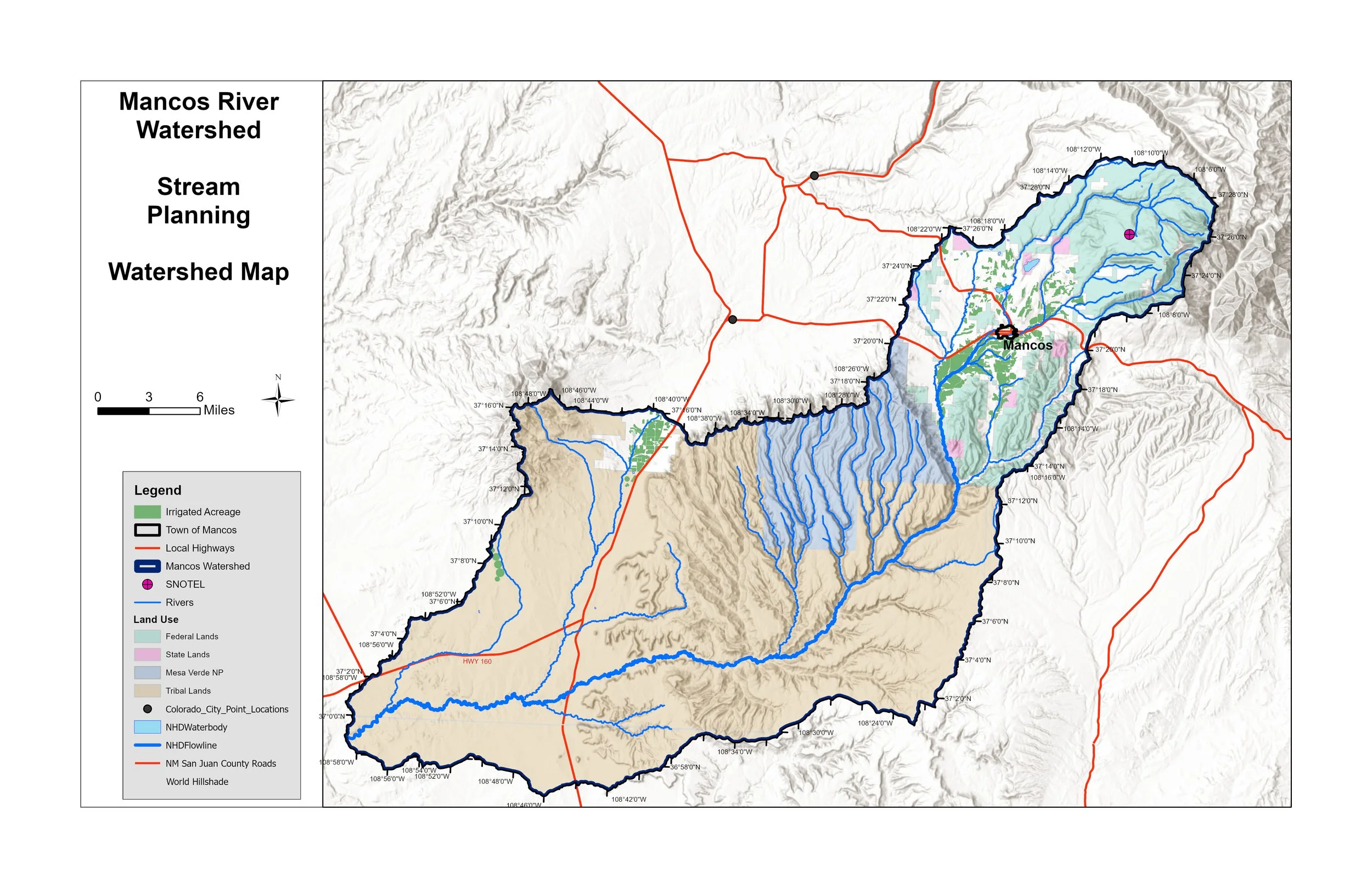
Mancos Wildfire Ready Action Plan
What is a WRAP?
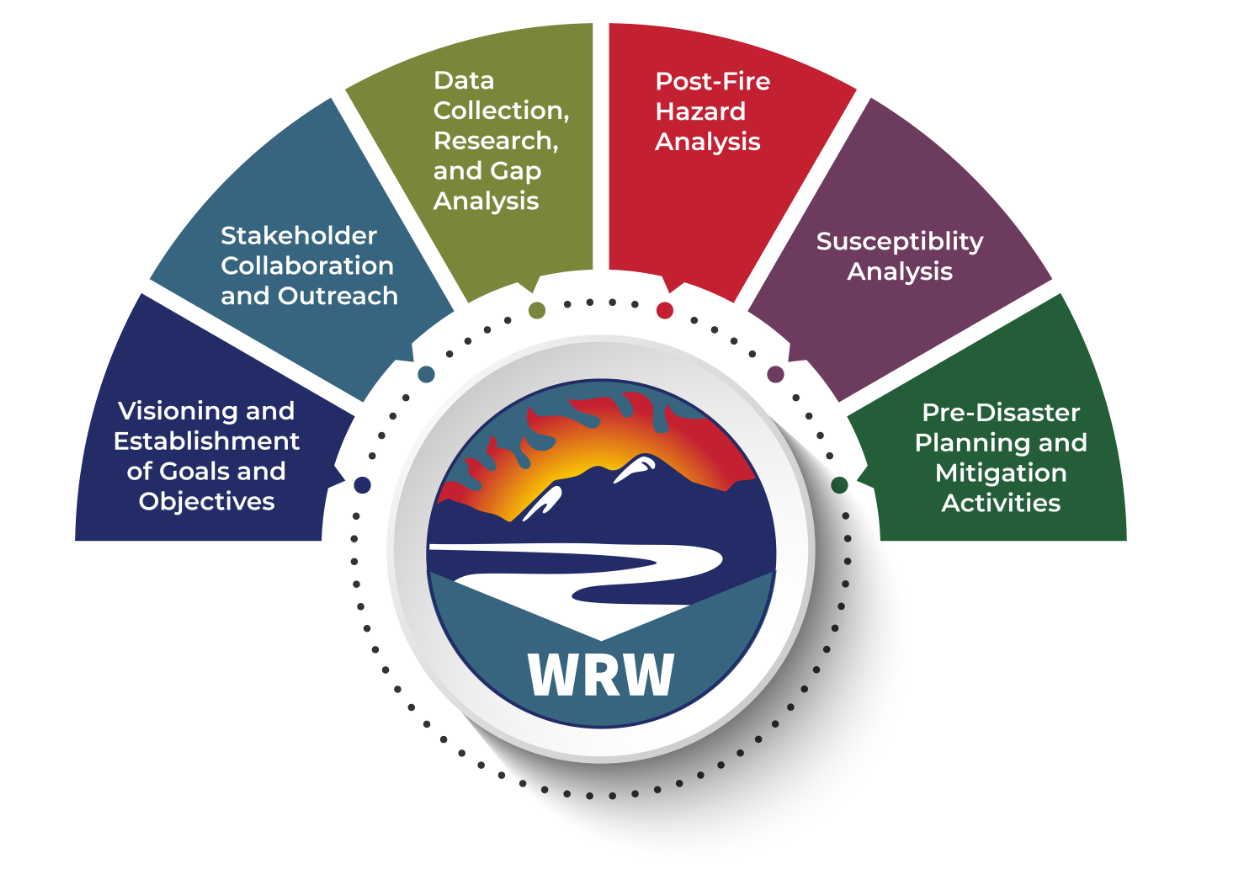
Wildfire Ready Action Plans (WRAPs) provide guidance for communities to assess their watersheds and develop plans for pre- and post-fire mitigation actions. The goal is to improve watershed resilience in a way that will lessen the impact of wildfires to values-at-risk.
Why is the MCD Supporting a WRAP?
Goals:
Identify post-fire hazards and values at risk.
Increase public awareness of post-fire hazards.
Advance an action-oriented approach to build watershed resistance in preparation for the next fire.
Promote collaborative work and partnerships.
Share information resources.
Foster collaboration with partners and community members throughout the WRAP planning and implementation process.
Develop a funding strategy for WRAP implementation.
Objectives:
Define and identify specific pre- and post-fire actions to mitigate post-fire hazards.
Develop an educational campaign that relays the findings of the WRAP.
Incorporate a post-fire playbook that identifies recovery organizational structure, responsibilities, communication, and implementation.
Implement five Wildfire Ready Watershed projects in the five years following the completion of the WRAP.
Develop a shared GIS resource to promote watershed preparedness and post-fire recovery.
Identify funding opportunities for watershed resilience projects within two years of completing the WRAP.
Provide opportunities for partners and community members to engage in the WRAP process through ongoing communication, educational opportunities, and integration of partner and community member ideas into planned projects.
WRAP Definitions
-
Values-at-Risk (VARs) are post-fire hazard risks specific to the community. VARs can include critical facilities, transportation, and agricultural production.
-
By identifying the community priorities and potential risks, a successful WRAP will result in a list of projects that can be implemented to reduce the effects of a wildfire.
-
A pre-disaster preparedness plan considers susceptibility and identifies projects and mitigation to prioritize before a wildfire occurs. Hazards and risks are identified through methods including fluvial hazard mapping, debris flow modeling, erosion predictions, etc. The WRW program has guidelines for identifying hazards and prioritizing their risks. However, the real need is community-centered data to highlight potential hazards that pose the most risk for a watershed. Once the risks are identified and categorized, projects based on the modeling results can be planned to reduce or mitigate post-fire risks. An example would be culvert repairs or replacements to better handle excess flows in the case of a post-fire flood.
-
A post-disaster preparedness plan addresses threats to life and property after a wildfire occurs. The WRW program has guidelines for how to plan for different types of hazards. Planning begins with deciding on the scale of the plan, and then community-centered data is used to prioritize assets and hazards. This includes aspects like debris flows and potential pollutant sources, as well as areas or structures that have higher priorities to protect from fire, such as water treatment plants. Plans include not only approaches for dealing with the wildfire event itself, but also with immediate recovery efforts. There is a critical window for reducing pollutants, like chemical runoff, before the first storm after a wildfire event.